
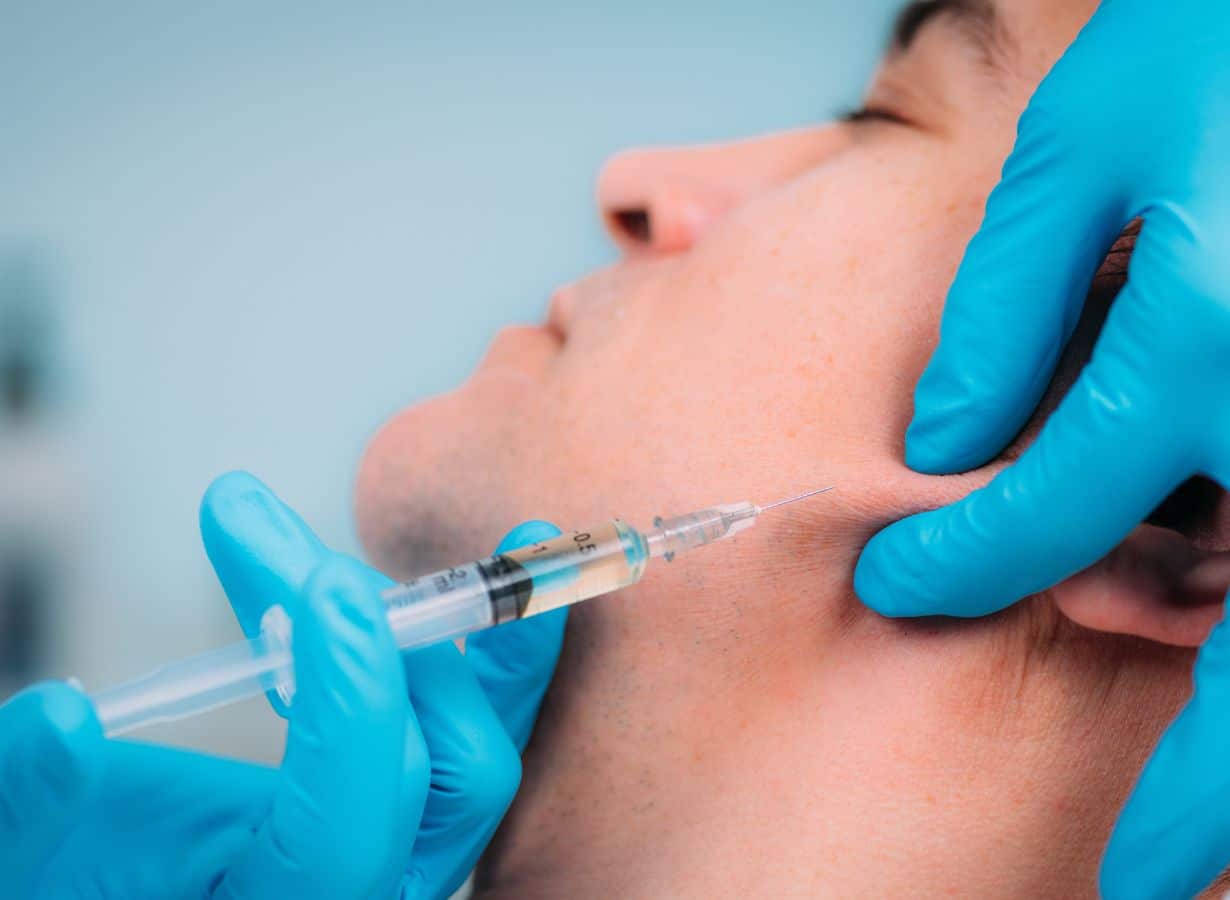
an jawline fillers help create a more defined profile? In many cases, yes, but the answer depends on what is causing the profile to look less defined in the first place. A more sculpted lower face is not created by filler alone or by simply adding volume along the jaw and hoping it sharpens the entire profile. A defined result usually depends on the relationship between the jawline, chin projection, skin quality, tissue heaviness, and the injector’s ability to place product in a way that creates structure without making the lower face look bulky or unnatural.
That is why the better question is not just whether filler can define the jawline in the abstract. The better question is whether dermal filler is the right tool for your specific anatomy and aesthetic goals. For some patients, jawline filler can improve contour, strengthen the transition from chin to jaw, reduce the appearance of early jowling, and make the profile look cleaner and more balanced. For others, the issue may be more related to skin laxity, fullness under the chin, or weak chin support, in which case filler may help only as part of a broader treatment plan.

This guide explains how jawline fillers can improve profile definition, what makes a result look sharp but natural, why product selection and technique matter, and what patients should understand before deciding whether injectable treatment is the right approach for the lower face.
Why A Defined Profile Depends On More Than The Jawline Alone
Many patients look at the side profile and assume the jawline itself is the only issue. In reality, profile definition is created by several structures working together. The chin influences how strong or recessed the lower face appears. The angle beneath the jaw affects how clean the transition looks from face to neck. The skin and soft tissue of the lower face determine whether contour appears tight and sculpted or softer and less distinct.
That means jawline filler can be helpful, but it works best when the injector evaluates the entire lower face instead of focusing on one line in isolation. If the chin is underprojected, if there is significant heaviness beneath the jaw, or if skin laxity is advanced, adding filler only along the mandibular border may not create the improvement the patient is expecting. A more defined profile is usually the result of proportion and structure, not just added volume.
What A More Defined Profile Should Actually Look Like
Before deciding whether jawline filler is appropriate, it helps to define what “more defined” actually means. For most patients, a good result does not mean an exaggerated or overly sharp lower face. It usually means a cleaner, more polished outline that still looks believable and fits the rest of the facial features.
Better Separation Between The Jaw And Neck
One of the main reasons profile definition is lost is that the transition between the jawline and the neck starts to look less distinct. A well-planned filler treatment may help improve this boundary by creating more support along the jaw so the lower face looks more structured.
Improved Balance Between The Chin And Jaw
In many profiles, the jawline does not look weak because the jaw is flat everywhere. It looks weak because the chin and surrounding support are not contributing enough to overall shape. When the chin and jawline are evaluated together, the profile often looks more harmonious.
Sharper Contour Without Bulk
A natural result usually does not look “filled.” It looks cleaner. The lower face should appear stronger or more refined without looking heavy, square, or artificially enlarged. The best results often create subtle visual improvement rather than obvious cosmetic change.
How Jawline Fillers Can Improve Profile Definition
Jawline fillers can help create a more defined profile by adding structure in areas where the lower face lacks support. In the right patient, this may improve the appearance of the mandibular border, strengthen the angle of the jaw, soften the look of early jowling, and create a firmer visual line from the chin backward.
In younger patients, the goal may be to create more contour in a naturally soft or less projected lower face. In older patients, the goal is often different. Instead of adding a dramatically new shape, filler may be used to restore support that has been lost with age and to improve the appearance of contour that has become less crisp over time.
The most important point is that filler creates the illusion of more definition by improving structure. It does not remove fat, tighten significant loose skin, or replace the role of other treatments when those issues are the primary cause of a blurred profile.
Why Product Choice Matters In The Jawline
Not all fillers behave the same way, and the jawline is not an area where softness alone is usually the goal. The product selected for this part of the face often needs more structure and support than what might be used in a very soft area like the lips.
Structure And Support
Jawline contouring usually requires a filler that can hold shape and provide lift or framework rather than simply blending into tissue with a very soft finish. A product that is too soft may not create enough definition, especially in patients who need more architectural support.
Projection And Precision
The lower face often benefits from controlled projection. That means the filler should help define contour without spreading too diffusely or creating puffiness. The ideal choice depends on where the filler is being placed and how much support is needed.
Tissue Integration
Even in a structural area, the result still has to look natural. The filler should integrate in a way that supports the shape of the jawline without creating irregularity or stiffness. The best product is not necessarily the most popular one. It is the one that fits the treatment plan and the patient’s anatomy.
Why Some Patients Need Chin Support Along With Jawline Filler
A more defined profile is often not just a jawline issue. In many patients, the chin plays a major role in whether the side profile looks strong, balanced, or recessed. If the chin sits too far back, even a carefully treated jawline may still look incomplete.
This is why some injectors evaluate the chin and jawline as part of the same lower-face plan. Improving projection or structure at the chin can enhance the profile more effectively than placing all the filler along the lateral jaw. In some cases, small refinements in multiple areas create a more elegant result than a larger amount of product placed in one line.
Patients sometimes assume this means “more filler,” but it often means smarter placement. The goal is not to enlarge the lower face. It is to create proportion so the profile looks more cohesive.
Who Is Usually A Good Candidate For Jawline Filler
Jawline filler is often most helpful for patients who have mild to moderate loss of definition, a naturally soft jawline, subtle asymmetry, early jowling, or a profile that would benefit from more lower-face structure. These patients often respond well because filler can create visible contour without fighting against too many other anatomical limitations.
Patients who tend to do well often want refinement rather than dramatic transformation. They may feel their profile looks slightly weak in photos, they may notice that the lower face is losing sharpness with age, or they may want the jawline to look cleaner without surgery.
Good candidates usually understand that filler can improve shape, but not solve every issue. Realistic expectations are one of the biggest predictors of satisfaction.
When Jawline Filler May Not Be Enough On Its Own
Not every less-defined profile is best treated with filler alone. If the area under the chin is dominated by fullness, if the skin has significant laxity, or if the lower face is already heavy, filler may create only limited improvement unless it is part of a larger plan.
For example, some patients are better served by combining lower-face contouring with treatments that address skin quality or fullness beneath the jaw. Others may need a more strategic approach that includes the chin, not just the posterior jawline. This does not mean filler cannot help. It means the most satisfying outcome often comes from treating the actual cause of the definition problem rather than assuming every profile concern is solved the same way.
That is why consultation and facial assessment matter so much. The best injector should be willing to explain not only what filler can do, but also what it cannot do.
Why Less Product Often Creates A Better Jawline Result
Patients sometimes assume that a stronger jawline requires a large amount of product. In reality, one of the fastest ways to make the lower face look unnatural is to overfill it. Too much filler can make the jaw look wide, boxy, puffy, or heavy rather than refined.
Definition Is Not The Same As Size
A more defined profile usually comes from cleaner contour, not just a larger lower face. When filler is placed strategically and conservatively, the jaw can look sharper without looking enlarged.
Gradual Refinement Often Looks More Elegant
Many of the best lower-face results come from building structure gradually. Instead of trying to create dramatic change in one session, an injector may recommend a conservative starting point and then reassess after the filler settles. This often leads to a more believable and more individualized result.
Overfilling Can Hide Good Technique
Once too much product is used, the natural lines of the face become harder to preserve. Even a good product can start to look artificial if the anatomy is pushed past what it can support gracefully.
Technique Matters As Much As The Filler Itself
Patients often focus on which filler will be used, but technique is just as important as product choice. Jawline contouring is not simply about placing product in a straight line. It requires depth control, attention to facial proportions, symmetry assessment, and an understanding of how small changes affect the profile from multiple angles.
A skilled injector considers how the result looks from the side, from the front, and in motion. They think about how the jawline relates to the cheeks, chin, neck, and lower-face width. They also understand that some patients need a subtle contour while others need structural support in a more targeted way.
This is one reason the same product can look excellent in one patient and unnatural in another. The result depends heavily on the injector’s plan and execution.
What Makes Jawline Filler Look Unnatural
Understanding what causes poor outcomes can help patients make better decisions. Most unnatural jawline results come from one or more of the following: too much product, poor anatomical planning, ignoring chin balance, treating heaviness with more heaviness, or trying to copy a trend instead of respecting the patient’s own facial structure.
Too Much Width In The Lower Face
A jawline can lose elegance when filler adds too much lateral bulk. The lower face may start to look wider rather than more defined. This is especially important in patients who already have strong masseters or naturally broader lower-face anatomy.
Ignoring The Profile As A Whole
Treating the jawline without considering the chin, submental area, and facial proportions can produce a result that feels incomplete or oddly distributed. Good lower-face contouring is rarely about one line alone.
Chasing Sharpness That Does Not Suit The Face
Not every patient should have the same level of angularity. The best result is one that supports the face rather than dominating it. In many cases, softer definition looks more refined and more attractive than an aggressively sculpted outline.
How Your Anatomy Influences What Is Possible
The best jawline filler plan depends on your starting point. Patients with thinner tissue and mild softness may see definition more easily than patients with heavier tissue or greater skin laxity. Age also matters. A younger patient may want enhancement of existing structure, while an older patient may be looking for restoration of support that has gradually diminished.
Previous filler history matters as well. If a patient has older filler in the lower face, asymmetry, migration, or tissue changes from past treatments, those details should be evaluated before simply adding more product. Sometimes refinement is straightforward. Sometimes the better plan is reassessment and careful rebuilding.
This is why there is no universally “best” jawline filler in the abstract. The right approach comes from how the product, placement, and anatomy work together.
What To Ask During A Jawline Filler Consultation
If your goal is a more defined profile, the consultation should focus on facial assessment, not just product names. Ask the injector whether the jawline alone should be treated or whether the chin also needs evaluation. Ask what degree of definition is realistic for your anatomy. Ask whether your profile concern appears to be structural, soft tissue related, or a combination of both.
You can also ask how they approach natural-looking lower-face contour, whether they recommend a gradual plan, and what kind of result they think will best fit your features. The right answer is usually thoughtful and individualized, not one-size-fits-all.
Why The Best Jawline Filler Result Often Looks Effortless
The most successful jawline treatments usually do not look like obvious cosmetic work. Instead, they make the lower face appear cleaner, stronger, and more balanced in a way that blends naturally with the rest of the face. Friends may notice that the profile looks more polished without immediately identifying why.
That is often the real benchmark of a good result. The filler should not become the main feature. It should support the face quietly by improving contour and proportion.
In that sense, jawline filler can absolutely help create a more defined profile, but only when the treatment is guided by anatomy, restraint, and technique rather than by the assumption that more product automatically creates a better outcome.
Jawline Filler Treatments At Happy Hands Aesthetics
If you are considering jawline fillers and want a result that looks clean, balanced, and natural, working with an injector who understands facial proportion and lower-face structure is essential. Happy Hands Aesthetics offers injectable treatments designed around individualized planning, subtle refinement, and results that enhance your features without overpowering them. You can learn more about available options on the Injectables page.
Schedule A Consultation
If you are ready to find out whether jawline filler may help improve your profile, contact Happy Hands Aesthetics to discuss your facial anatomy, contour goals, and treatment options. You can request next steps through the Contact Us page.


The Final Verdict
When seeking the best, why settle for anything less?
Contact Happy Hands Aesthetics, the best cosmetic injection clinic in LA, for dermal fillers, and schedule an appointment.

