
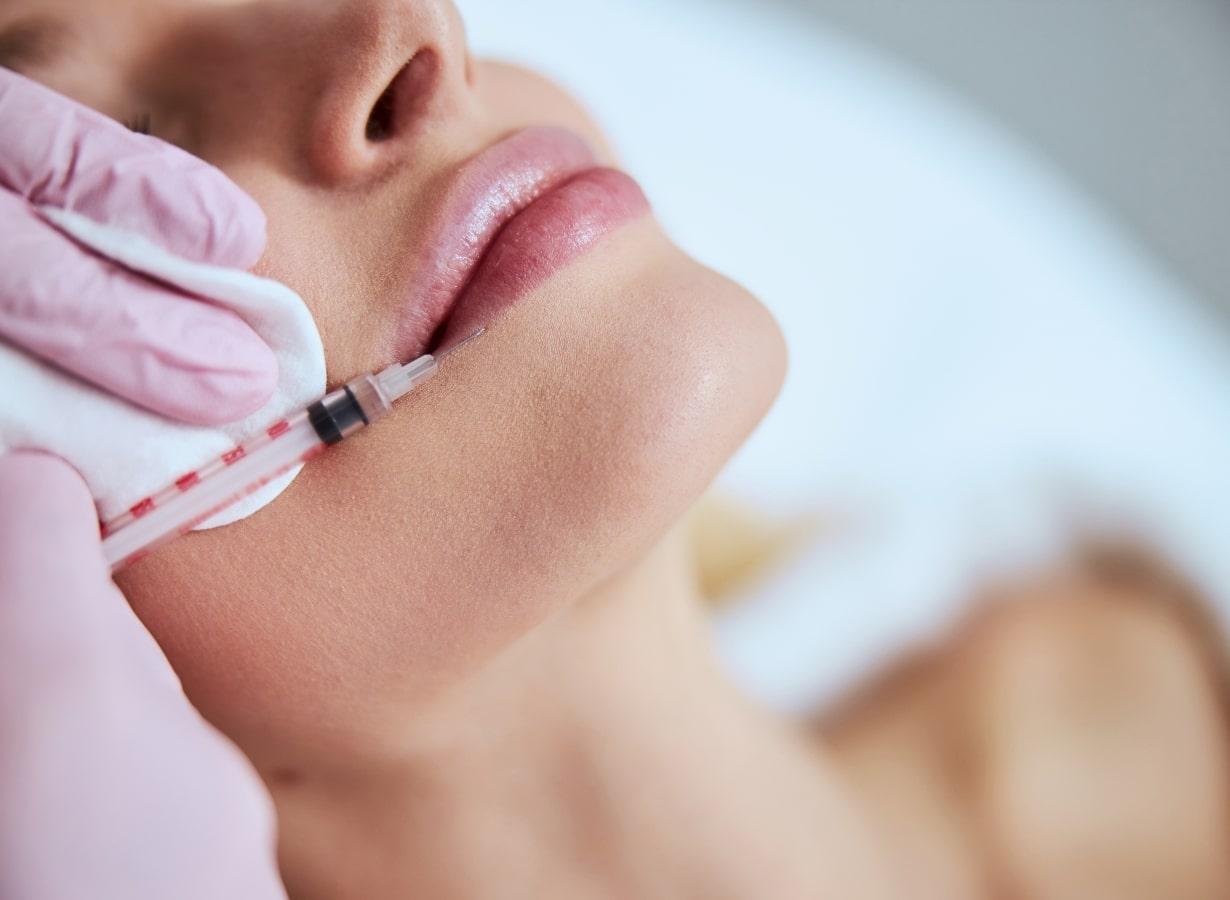
ermal fillers are commonly used to enhance lips, restore facial volume, soften folds, and improve facial contours. When filler is carefully selected and placed by an experienced medical professional, the goal is typically a balanced result that complements the patient’s natural features. However, some patients become concerned when filler appears to extend beyond the area where it was originally intended.
This is often described as filler migration. The U.S. Food and Drug Administration lists migration, or movement of filler material from the injection site, as a reported but rare risk of dermal fillers. It is important to understand, however, that not every lump, uneven area, or change in appearance means filler has actually migrated. Swelling, product accumulation, asymmetry, nodules, or the way filler integrates with surrounding tissue can sometimes create a similar appearance.

For patients in Los Angeles, West Hollywood, Beverly Hills, and surrounding communities who are concerned about previous filler results, the first step should be a professional assessment. Correction depends on what type of filler was used, where it was placed, how long it has been present, and what is actually causing the unwanted appearance.
What Does Filler Migration Mean?
Filler migration generally refers to filler material being present outside the intended treatment area. Instead of remaining where it was placed to create a specific contour or volume effect, some of the material may appear to extend into nearby tissue.
The lips are one of the areas where patients commonly use the term filler migration. For example, someone may notice fullness above the natural border of the upper lip or an appearance that makes the lip border less defined. Migration can potentially occur in other treatment areas as well.
The FDA’s dermal filler guidance identifies migration as one of the rare risks reported with dermal fillers. Because several other post-treatment changes can resemble migration, patients should avoid diagnosing the problem themselves based only on photographs or social media examples.
What Can Cause Filler To Appear Outside The Intended Area?
There is rarely one universal explanation for an unwanted filler result. Facial anatomy, the type of product used, how much filler was placed, injection depth, previous treatments, and individual tissue characteristics can all matter.
One possible contributing factor is excessive volume in a relatively small treatment area. If repeated treatments continue adding filler before previous material has been adequately assessed, the area may begin to look heavy, poorly defined, or disproportionate.
Placement can also affect the appearance. Different fillers have different physical properties, and different facial areas require different treatment strategies. A product or technique that is appropriate for one area may not be appropriate for another.
This is one reason choosing an experienced dermal filler provider and discussing previous injections before treatment are important.
Is Lip Filler Migration Common?
Lip filler migration receives considerable attention online because even small changes around the lip border can be noticeable. The lips are highly mobile, relatively small, and anatomically complex, so treatment planning must account for both shape and proportion.
A patient concerned about lip filler migration may notice fullness extending above the vermilion border, reduced definition around the lip, an uneven contour, or a result that appears heavier than originally intended.
That does not mean every swollen or uneven lip represents migration. Lip filler commonly causes temporary swelling shortly after treatment, and the initial appearance should not necessarily be considered the final result.
If an unusual contour persists after the expected recovery period, a professional evaluation can help determine whether the issue involves migration, residual swelling, excessive volume, asymmetry, product placement, or another cause.
Can Too Much Filler Contribute To An Overfilled Appearance?
Yes. Adding more volume than a particular facial area can accommodate aesthetically may create an overfilled or disproportionate appearance. This does not necessarily mean the filler has physically migrated, but the visual result can sometimes resemble migration.
Repeated treatment without considering existing filler can also change facial proportions over time. Before adding another syringe, an injector should understand what products were previously used, when they were placed, and how the current facial structure looks.
The goal of aesthetic treatment should generally be thoughtful facial balance rather than simply increasing volume during every appointment.
How Can You Tell The Difference Between Migration And Normal Swelling?
Timing is important.
Swelling, tenderness, bruising, and redness can occur after dermal filler injections. The FDA notes that many common filler side effects occur shortly after treatment and resolve over a period of days to weeks.
Migration, persistent excess volume, or other concerns may become more apparent after routine swelling has subsided. A patient who evaluates the result too early may mistake temporary post-injection swelling for a longer-term problem.
Do not aggressively massage, manipulate, or attempt to reshape filler on your own unless the treating healthcare professional specifically instructs you to do so. The appropriate response depends on the product, treatment area, and underlying cause.
Can Migrated Hyaluronic Acid Filler Be Dissolved?
Hyaluronic acid, commonly abbreviated as HA, is used in many popular injectable fillers. In some cases, a healthcare professional may use an enzyme called hyaluronidase to break down hyaluronic acid filler when reduction or correction is considered appropriate.
It is important to understand that filler correction is not as simple as automatically injecting dissolving solution into every irregular area. The provider first needs to determine whether the filler is actually HA, where it is located, how much correction may be appropriate, and whether dissolving is the best approach.
According to current FDA information, hyaluronidase products are approved for certain medical uses, but their use specifically to dissolve dermal filler is not an FDA-approved indication. The decision to use hyaluronidase for filler correction therefore requires medical judgment and a discussion of potential benefits and risks.
Can All Types Of Dermal Fillers Be Dissolved?
No. This is one of the most important distinctions in filler correction.
Hyaluronidase acts on hyaluronic acid. Other filler materials, including calcium hydroxylapatite, poly-L-lactic acid, PMMA, and other products, do not have the same straightforward reversal mechanism.
The FDA advises that reducing or removing certain fillers may require additional procedures and that some filler material can be difficult or impossible to remove completely.
This makes it important to know exactly what was injected before attempting correction. Patients who received filler from another practice should provide any available treatment records, product names, dates, and quantities during their consultation.
Does Filler Correction Always Mean Dissolving Everything?
No. Correction should be individualized.
Some patients may benefit from reducing a specific area rather than removing all existing filler. Others may need time for swelling to settle before anything is done. In certain situations, a provider may recommend allowing temporary filler to naturally diminish instead of immediately intervening.
After appropriate correction and healing, some patients may later consider carefully planned filler treatment to restore proportion or definition. The important point is that additional filler should not automatically be used to camouflage an unclear problem.
A thoughtful assessment comes first.
Why Is Knowing The Original Filler Product Important?
Different fillers are made from different materials and behave differently within tissue.
Knowing the original product can help determine whether the filler is temporary, whether hyaluronidase may affect it, and what correction options may reasonably be considered.
If you still have information from your previous treatment, bring it to your consultation. Useful information includes:
- The brand and specific filler product
- The date of treatment
- The areas injected
- The number of syringes used
- Previous filler treatments in the same area
- Any prior dissolving treatments
- Any complications or unusual reactions
When patients are unsure what was injected, correction may require a more cautious approach.
Should More Filler Be Added To Correct Migration?
Not automatically.
Adding more product to an area that is already overfilled or poorly defined could make the problem more noticeable. A qualified injector should first identify whether the concern involves migration, volume, asymmetry, swelling, or another issue.
Only after understanding the existing anatomy and filler should additional treatment be considered.
Patients interested in learning more about how different injectable approaches compare can also review how dermal fillers compare with other aesthetic treatments.
When Should A Filler Concern Be Treated As An Emergency?
Most cosmetic concerns about filler shape or migration are not emergencies. However, certain symptoms during or shortly after a filler procedure require urgent medical attention.
The FDA advises patients to seek immediate medical care for symptoms including unusual or severe pain, vision changes, or skin near the injection area becoming white, gray, or blue. Symptoms suggesting a stroke, including sudden weakness, difficulty speaking, facial drooping, severe headache, dizziness, or confusion, also require emergency attention.
These symptoms can indicate a vascular complication rather than ordinary filler migration. Accidental injection of filler into a blood vessel is uncommon, but the consequences can be serious, including tissue injury, vision loss, or stroke.
Do not wait for a routine follow-up appointment when serious warning signs are present.
How Can The Risk Of Unwanted Filler Results Be Reduced?
No cosmetic injection is completely risk-free, but thoughtful treatment planning can reduce avoidable problems.
The FDA recommends receiving filler only from a licensed healthcare professional who has appropriate training and experience with dermal filler injections. Patients should know which product is being used, understand the risks associated with the treatment area, and make sure the product comes in properly labeled, sealed packaging.
A conservative approach can also be valuable. Facial structure should be evaluated as a whole rather than treating every perceived concern with additional volume.
Patients should also tell their injector about previous filler treatments. Even if the earlier injections occurred months or years ago, that information can affect future treatment decisions.
Why Injector Experience Matters When Correcting Filler
Correcting previous filler can be more complicated than performing a first treatment because the provider may be evaluating product placed by someone else, incomplete treatment records, multiple filler types, or altered facial contours.
An experienced healthcare professional should examine the area, review the treatment history, discuss realistic options, and explain whether the best approach may involve observation, dissolving appropriate HA filler, staged correction, or another strategy.
The goal should be to improve balance safely without creating another problem by trying to correct too much at once.
Filler Evaluation In West Hollywood And Los Angeles
Patients searching for information about filler migration in Los Angeles often want to know whether an existing result can be improved while still preserving a natural appearance.
Happy Hands Aesthetics provides cosmetic injectable services from its West Hollywood location on Melrose Avenue. Dr. Charlotte Sarshad, D.O., takes an individualized approach to facial assessment and injectable treatment.
Patients from West Hollywood, Beverly Hills, Hollywood, Los Angeles, the Fairfax District, Melrose, and surrounding communities can schedule a consultation to discuss previous dermal filler, current concerns, and potential treatment options.
Contact Happy Hands Aesthetics
If you are concerned about previous lip filler, facial filler, excessive volume, or possible filler migration, professional evaluation can help determine what is actually causing the appearance before additional treatment is performed.
Happy Hands Aesthetics
8500 Melrose Ave, Suite 210
West Hollywood, CA 90069
Phone: (877) 899-8270
Visit Happy Hands Aesthetics to learn more about dermal fillers and cosmetic injectable treatments in West Hollywood and Los Angeles.


The Final Verdict
When seeking the best, why settle for anything less?
Contact Happy Hands Aesthetics, the best cosmetic injection clinic in LA, for dermal fillers, and schedule an appointment.
Frequently Asked Questions
1. What Does Filler Migration Look Like?
Possible filler migration may appear as fullness, puffiness, or product extending beyond the intended treatment area. Around the lips, patients sometimes notice fullness above the natural lip border. However, swelling, excessive volume, asymmetry, or other issues can resemble migration, so professional assessment is important.
2. Can Lip Filler Migrate Above The Lip?
Filler material can potentially move from its intended location, and the FDA lists migration as a reported rare risk of dermal fillers. Fullness above the lip border does not automatically confirm migration because swelling or excess product can create a similar appearance.
3. Can Filler Migration Be Fixed?
Correction may be possible, but the treatment depends on the filler material, location, amount, age of the filler, and reason for the unwanted appearance. Hyaluronic acid filler may sometimes be reduced using hyaluronidase under professional medical supervision.
4. How Is Hyaluronic Acid Filler Dissolved?
A healthcare professional may use hyaluronidase, an enzyme that breaks down hyaluronic acid, when reduction of HA filler is considered appropriate. Use of hyaluronidase specifically for dermal filler dissolution is an off-label use in the United States and should be discussed with a qualified healthcare provider.
5. Can Radiesse Or Sculptra Be Dissolved With Hyaluronidase?
No. Hyaluronidase targets hyaluronic acid and does not work the same way on calcium hydroxylapatite products such as Radiesse or poly-L-lactic acid products such as Sculptra. Correction options for non-HA products require a different evaluation.
6. Should I Massage Filler If I Think It Has Migrated?
Do not aggressively massage or manipulate the area on your own unless your treating healthcare professional specifically recommends it. The appropriate treatment depends on what is actually causing the irregular appearance.
7. Can Adding More Filler Correct Migrated Filler?
Adding more filler is not automatically the correct solution. If an area already contains excessive or poorly positioned volume, additional product could make the appearance worse. The existing filler should be assessed before new injections are considered.
8. How Long Should I Wait Before Deciding My Filler Looks Wrong?
Temporary swelling and bruising can affect appearance after injections, so very early results are not always representative of the final outcome. Your injector can advise when the area should be reassessed based on the product and treatment location.
9. When Should I Seek Immediate Medical Care After Dermal Fillers?
Seek immediate medical attention for unusual severe pain, vision changes, skin becoming white, gray, or blue near the injection site, or symptoms such as sudden weakness, difficulty speaking, facial drooping, dizziness, confusion, or severe headache. These may indicate a serious vascular complication rather than ordinary migration.
10. Where Can I Have Previous Filler Evaluated In West Hollywood?
Happy Hands Aesthetics is located at 8500 Melrose Ave, Suite 210 in West Hollywood, California. Patients concerned about previous dermal filler results can call (877) 899-8270 to discuss scheduling a consultation.
Medical Disclaimer: This article is provided for general educational purposes and is not medical advice, diagnosis, or a substitute for evaluation and treatment by a qualified healthcare professional.

